Rubber Roller for Leather About
Rubber rollers are essential components in various stages of leather processing. They are designed to withstand the demanding conditions of tanneries and workshops, offering several key benefits:
Durability: Made from specialized rubber compounds, these rollers can handle heavy use, constant contact with chemicals, and the rigors of leather processing. They boast excellent resistance to wear, tear, and abrasion.
Performance:
Grip and Control: The rubber surface provides good grip on leather hides, ensuring smooth feeding and precise manipulation throughout the process.
Absorption Properties: Certain types of rollers may have good absorption properties, which can be helpful in tasks like applying dyes or finishes.
Versatility: Rubber rollers come in a variety of configurations to suit different leatherworking applications. Here are some common types:
Embossing Rollers: These rollers feature engraved patterns that transfer designs or textures onto the leather surface.
Smoothing Rollers: Used for flattening and evening out the leather surface, these rollers provide a smooth finish.
Feeding and Guiding Rollers: These rollers ensure the leather moves through machinery consistently and efficiently.
Calendering Rollers: These rollers apply pressure and heat to bond layers of leather together or create specific thicknesses.
Additional Properties: Depending on the specific use, rubber rollers for leather may also be:
Chemical Resistant: To withstand exposure to tanning agents, dyes, and other chemicals used in leather processing.
Anti-Static: To prevent static buildup that can attract dust or impurities.
Choosing the Right Roller:
When selecting a rubber roller for your leatherworking needs, consider factors like:
The specific application: Different tasks require different roller functionalities (embossing, smoothing, feeding, etc.).
The type of leather: Thicker hides may require a more robust roller compared to delicate skins.
Desired properties: Chemical resistance, anti-static properties, or specific surface textures might be necessary for your process.
By understanding the types and functionalities of rubber rollers, leather manufacturers can select the most appropriate tools to optimize their production processes and achieve high-quality leather goods.
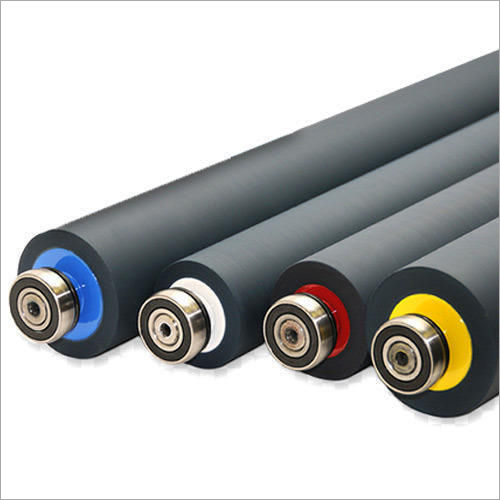
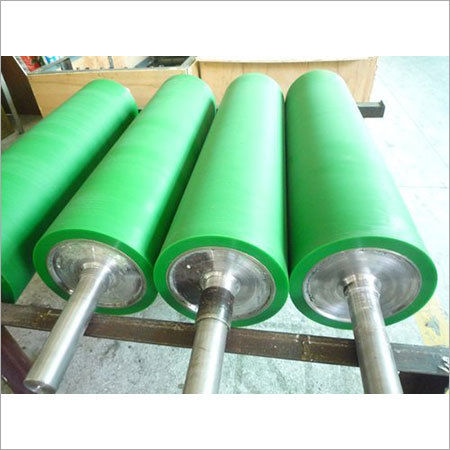
Precision-Engineered for Leather ProcessingOur rubber rollers are custom-designed to optimize leather industry applications, from delicate finishing to robust processing. With customizable size, hardness, and surface patterns, clients receive rollers tailored to precise needs. The solid cylindrical structure ensures consistent performance during demanding processes, reducing downtime and improving productivity in both leather and conveyor applications.
Exceptional Durability and Chemical ResistanceManufactured from premium high-abrasion-resistant rubber, these rollers are built to last even in challenging environments. Their high chemical resistance and capacity to withstand temperatures up to 120C ensure reliability during continuous industrial operations. Anti-static and low-maintenance attributes further enhance their suitability for leather industry workflows.
Tailored Solutions and Versatile ApplicationsChoose from a wide spectrum of colors, core materials (steel or aluminum), and hardness levels, ensuring an exact match for your machinery. We provide end-to-end support through our roles as exporter, manufacturer, supplier, and service provider across India, enabling seamless integration into new and existing systems for leather manufacturing operations.
FAQ's of Rubber Roller for Leather:
Q: How are rubber rollers used in leather processing and finishing?
A: Rubber rollers play a crucial role in the leather industry by providing a consistent surface for smoothing, pressing, or conveying leather materials. Depending on their surface finish-smooth or patterned-they help enhance leather texture, achieve uniform thickness, or facilitate precise finishing outcomes.
Q: What makes the rubber rollers suitable for high-temperature and chemical applications?
A: These rollers are crafted from high-abrasion-resistant rubber, enabling them to endure temperatures up to 120C. Their advanced material composition also offers high chemical resistance, making them particularly effective in environments that require frequent chemical exposure during leather processing.
Q: When should I opt for a patterned versus a smooth surface finish on my roller?
A: The selection depends on your specific application. Patterned surfaces are ideal for imparting texture or grip to leather, while smooth surfaces are best suited for finishing or when seeking a uniform surface appearance. Our team can help you choose based on your manufacturing requirements.
Q: Where can these rubber rollers be installed in my production setup?
A: These rollers are versatile and can be installed in various sections within leather processing units, particularly on conveyor systems, finishing machines, or any equipment requiring dependable rolling support during material handling.
Q: What is the process for customizing the rollers' size, hardness, and color?
A: Customization involves discussing your operational requirements with us, after which we tailor the roller's core material, length, diameter, surface finish, hardness (Shore A 30-80), and color to fit your machinery and finishing needs. We guide you step-by-step throughout the process.
Q: How does using these rollers benefit my leather manufacturing process?
A: Implementing our rubber rollers enhances product consistency, ensures gentle handling of delicate leather, reduces operational downtime due to their durability, and lightens maintenance requirements-ultimately streamlining your leather processing workflow.
Q: What support services do you offer as a manufacturer and exporter based in India?
A: We provide comprehensive support including product customization, timely delivery, installation guidance, and after-sales service, ensuring optimal use and satisfaction for clients both domestically and internationally.
 Working hours: Mon - Sat : 10AM - 7PM
 08045475521
 Get A Quote





 Send Inquiry




 Send Inquiry



