Aluminium Rollers About
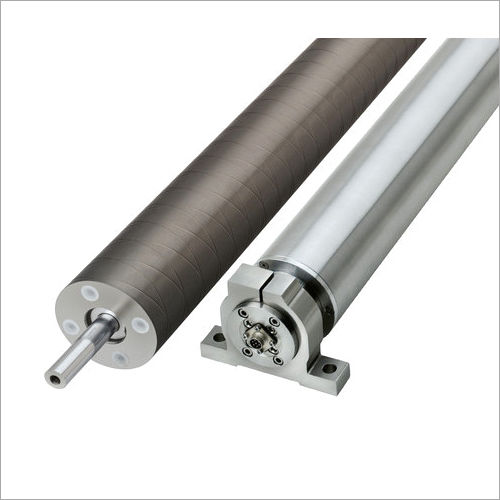
Our Aluminium Rollers are generally praised for their great design. To ensure quality, the full line of these rollers is manufactured in compliance with industry standards. Furthermore, we perform stringent checks to provide the industry with a perfect collection of these products. Industrial rollers are thoroughly examined. Because thorough quality assurance is standard, each manufacturing step is recorded. Aluminium Rollers are made to the exact needs of our customers. They are created in close collaboration with the end user.
Technical specification
Application | Engineering |
Roller Diameter | Customize |
Roller Length | Customize |
Roller Material | Aluminium |
Color | Black, Silver |
Brand | Anar |
Material | Aluminium |
Type | Roller |
Technical Details 
Technical Details
Superior Strength & DurabilityCrafted from 6061-T6 aluminium alloy, our rollers ensure high durability and long service life, boasting a minimum tensile strength of 260 MPa and a hardness of 95 HB. The anodized surface not only offers a polished, premium finish, but also delivers exceptional resistance to corrosion, making these rollers ideal for demanding industrial environments.
Custom Engineered for VersatilityAvailable in a broad range of custom diameters (50300 mm) and lengths (up to 6000 mm), with thicknesses from 2 mm to 10 mm, our aluminium rollers accommodate unique customer specifications. Both standard and custom end fittings are offered to ensure seamless integration into existing equipment across textile, packaging, printing, food processing, and industrial conveyor systems.
Precision Balancing & Easy MaintenanceEach roller undergoes precision balancing with accuracy up to 1 g mm and adheres to a strict concentricity tolerance of 0.02 mm. Lightweight yet robust, our rollers are designed for easy cleaning and assembly, minimizing downtime and maintenance costs while delivering optimum operational efficiency.
FAQs of Aluminium Rollers:
Q: How are the aluminium rollers manufactured and finished for quality assurance?
A: Our aluminium rollers are produced using advanced extrusion and machining processes, followed by anodizing for a polished, corrosion-resistant finish. Each roller undergoes strict quality checks, including balancing accuracy (up to 1 g mm) and a concentricity tolerance of 0.02 mm, to ensure reliable performance in industrial environments.
Q: What are the key benefits of choosing these rollers for industrial applications?
A: These rollers offer high tensile strength, low weight, outstanding corrosion resistance, and is precision balanced for smooth operation. Their easy-to-clean and maintain design reduces downtime, while custom sizing and various mounting options ensure compatibility across multiple industries, including textiles, packaging, and food processing.
Q: When should aluminium rollers with steel or aluminium inserts be preferred?
A: Aluminium rollers with steel or aluminium inserts should be selected when high strength-to-weight ratio and precision are critical, particularly in applications where rollers endure heavy loads, varying temperatures (-20C to +120C), or require minimal maintenance and enhanced operational lifespan.
Q: Where can these rollers be installed or used most effectively?
A: Our rollers are designed for versatile use across textile machinery, packaging lines, printing presses, food processing equipment, and industrial conveyors. They are suitable wherever precision handling, smooth rotation, and robust performance are essential.
Q: What mounting and size options are available for these rollers?
A: We offer both standard and custom end fittings to facilitate secure mounting in most industrial systems. Diameters range from 50 mm to 300 mm, lengths up to 6000 mm, and wall thickness between 2 mm and 10 mm. Custom dimensions are available upon request to ensure a perfect fit.
Q: How can the rollers be maintained and cleaned for optimal performance?
A: The rollers are designed for easy disassembly and cleaning. Their anodized and polished surfaces resist material buildup, allowing simple wipe-down or wash routines. Routine inspection and basic cleaning are typically sufficient to maintain long-term efficiency and extend service life.
 Working hours: Mon - Sat : 10AM - 7PM
 08045475521
 Get A Quote




 Send Inquiry



 Send Inquiry



