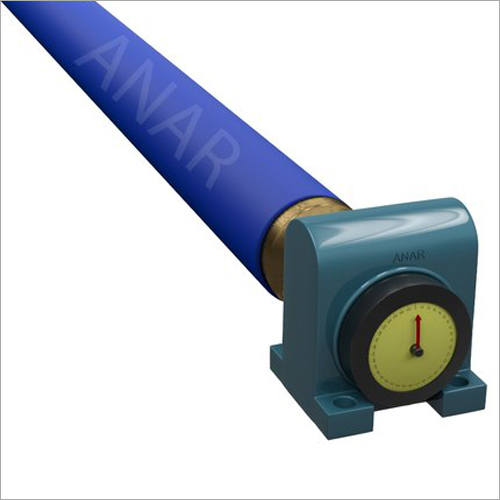
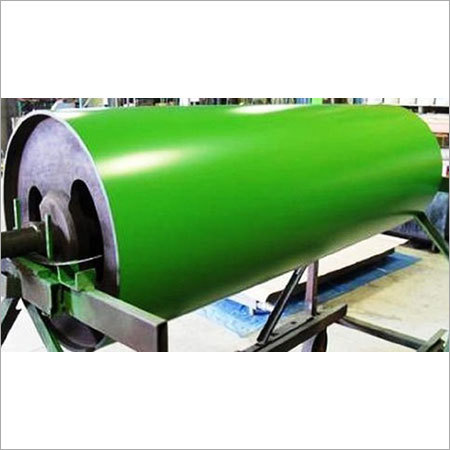
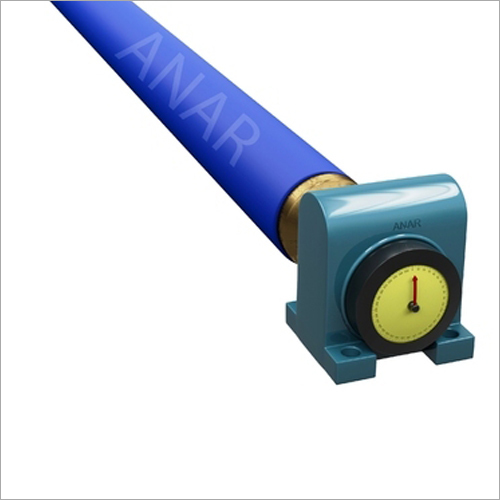
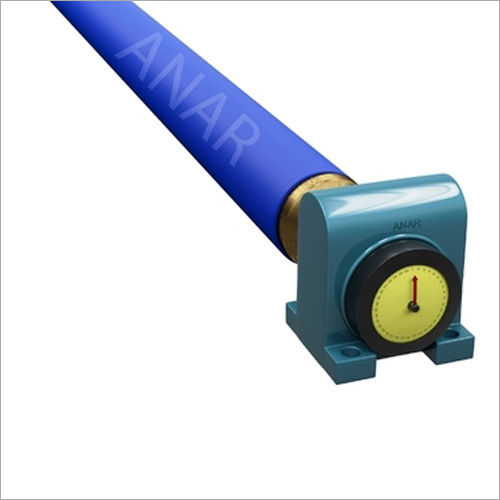
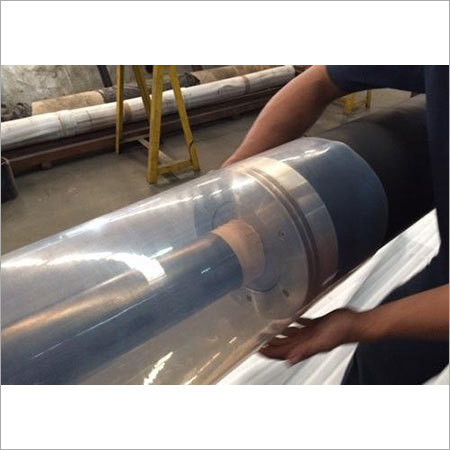
About Rubber Expander With FEP PTFE Sleeve
Technical details
|
Roller Length
|
Customized
|
|
Brand
|
Anar
|
|
Usage/Application
|
Paper Industry
|
|
Application
|
Paper Industries
|
|
Coating
|
Teflon
|
|
Material
|
FEP Teflon
|
|
Size
|
Depend on requirement
|
|
Roller Diameter
|
Customized
|
Exceptional Chemical ResistanceThanks to the fully covered FEP/PTFE sleeve, this rubber expander is highly resistant to harsh chemicals and solvents, providing long-lasting performance in aggressive industrial settings. Its non-porous construction prevents material buildup and ensures easy cleaning, supporting reliable operation in processing lines and challenging environments.
Precision-Engineered for VersatilityManufactured using precise moulding and machining techniques, these expanders can be tailored in length and diameter to match your specific operational needs. This flexibility ensures optimal performance in conveyor belt systems, textile machines, and other industrial applications, making it a versatile solution compatible with various belt widths and configurations.
Reliable Performance in Diverse ConditionsDesigned to operate efficiently between -20C and +200C and resist up to 7 kg/cm pressure, this expander delivers consistent, non-stick functioning even under high thermal and mechanical stress. Its robust construction and smooth surface finish contribute to reduced maintenance and increased service life, supporting uninterrupted productivity.
FAQs of Rubber Expander With FEP PTFE Sleeve:
Q: How is the Rubber Expander with FEP/PTFE Sleeve installed in conveyor systems?
A: The expander is integrated into conveyor belt systems by aligning its diameter and length to the belt width and required tension. Proper installation involves securing the unit in compatible mounts or brackets, ensuring the fully covered sleeve is exposed to the material flow for effective non-stick performance.
Q: What benefits does the FEP/PTFE sleeve provide?
A: The FEP/PTFE sleeve delivers outstanding chemical and corrosion resistance, prevents material sticking (non-stick feature), and ensures smooth surface finish. This enhances cleaning, reduces downtime, and extends the expanders lifespan in harsh industrial environments.
Q: Where are these expanders most commonly used?
A: These expanders are widely utilized in conveyor belt systems, textile manufacturing, printing presses, and packaging industries due to their resilience against chemicals, high temperatures, and mechanical wear.
Q: When should I select a rubber expander with a hardness of 50 to 70 Shore A?
A: A hardness of 50 to 70 Shore A is optimal when moderate flexibility and strength are required, such as in applications that demand high tensile strength yet need to accommodate occasional vibrations and dynamic forces.
Q: What is the process for customizing the expanders dimensions?
A: Customization involves specifying required belt width, length, diameter, and sleeve thickness. The manufacturer then moulds and precisely machines the expander to fit the provided specifications, ensuring a tailored solution for each application.
Q: How does the expander perform at high temperatures or under pressure?
A: Designed for temperatures from -20C to +200C and pressures up to 7 kg/cm, the expander maintains mechanical robustness and chemical integrity, ensuring consistent performance in extreme industrial conditions.
Q: What industries benefit most from using FEP/PTFE-sleeved rubber expanders?
A: Industries such as textiles, conveyor manufacturing, printing, and packaging gain significant advantages, particularly in processes where exposure to chemicals or solvents and the need for consistent, non-stick handling are paramount.
 Working hours: Mon - Sat : 10AM - 7PM
 08045475521
 Get A Quote




 Send Inquiry



 Send Inquiry



